
/06
Wellput
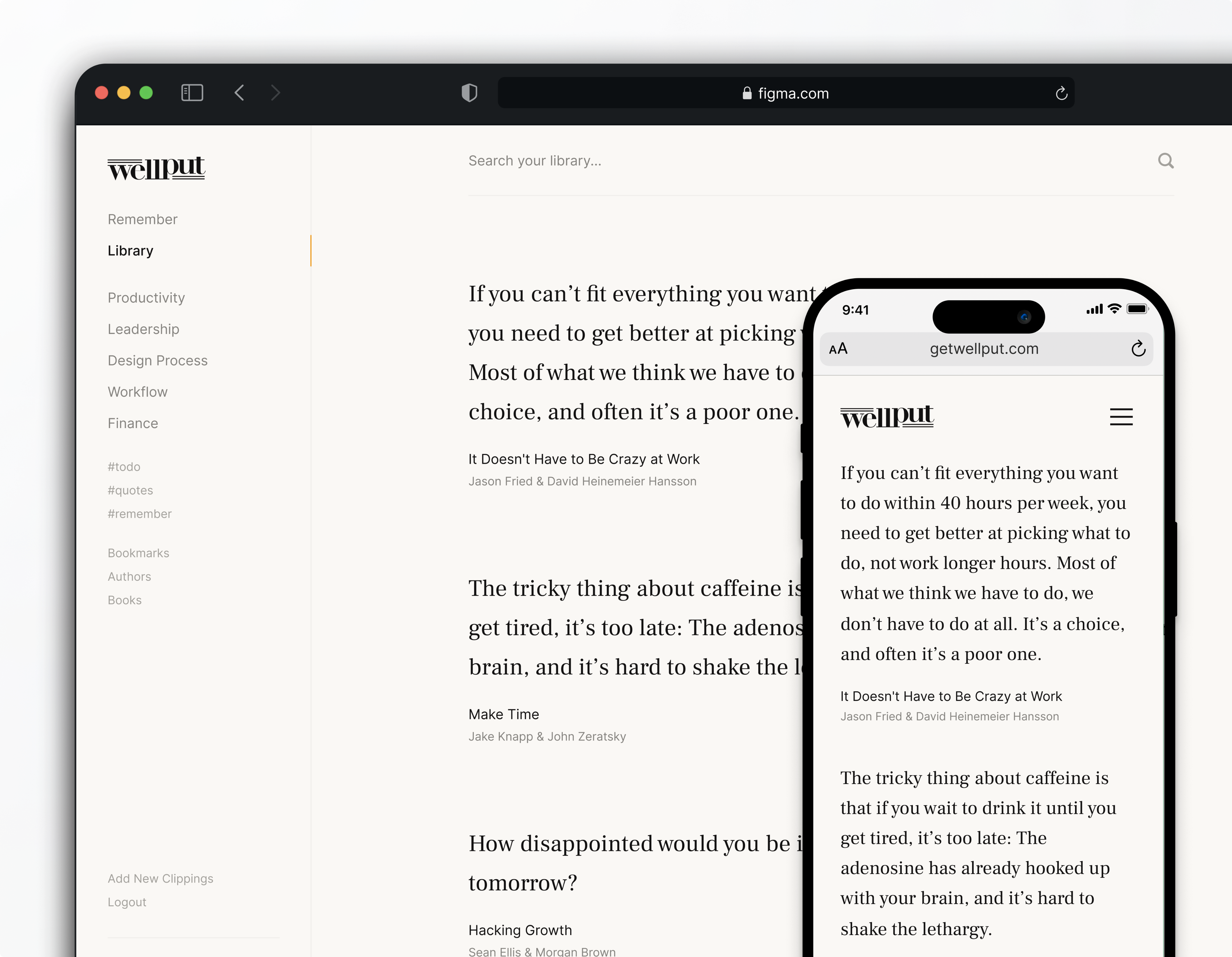
Led product exploration and design to help people leverage their Kindle insights.
Context
Kindle highlights promised learning leverage but delivered clutter. Users collected insights they never revisited.
Wellput was an internal Tonik product built from scratch to turn passive highlights into structured, retrievable knowledge. I led product discovery, defined strategy, and later owned product direction through MVP delivery (2020–2021).
Problem space
The opportunity wasn’t better storage it was better retrieval. Knowledge workers needed a way to filter, structure, and resurface insights in a meaningful way.
The core business question: Is the frustration strong enough to justify a standalone product? And can we differentiate in a crowded productivity space?
Discovery
I structured discovery around risk reduction: validating pain intensity, switching intent, and value proposition clarity before investing in build.
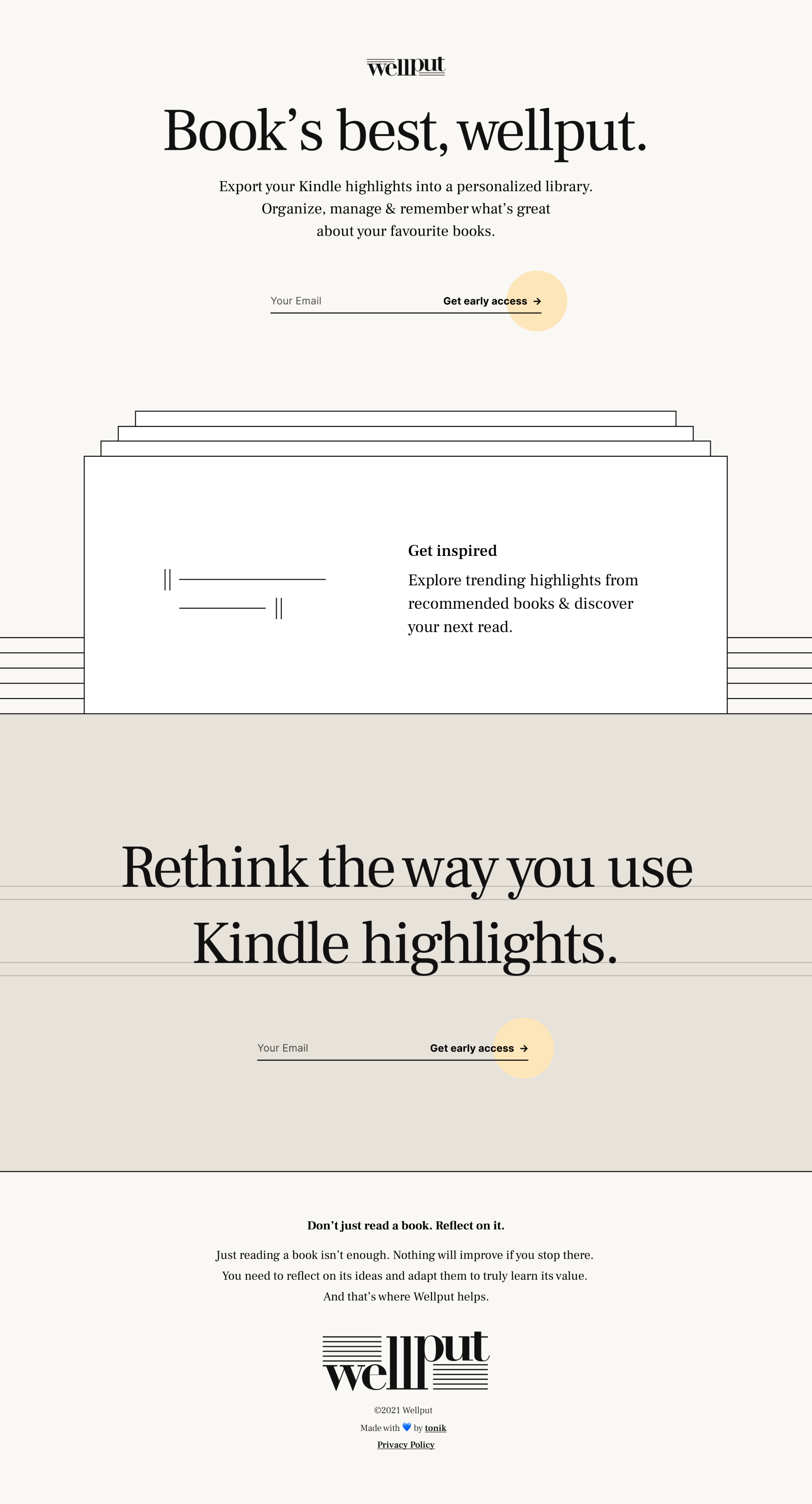
Rather than jumping into features, we pressure-tested the problem through competitive analysis, user interviews, surveys, scoping workshops, and a market-facing landing page.
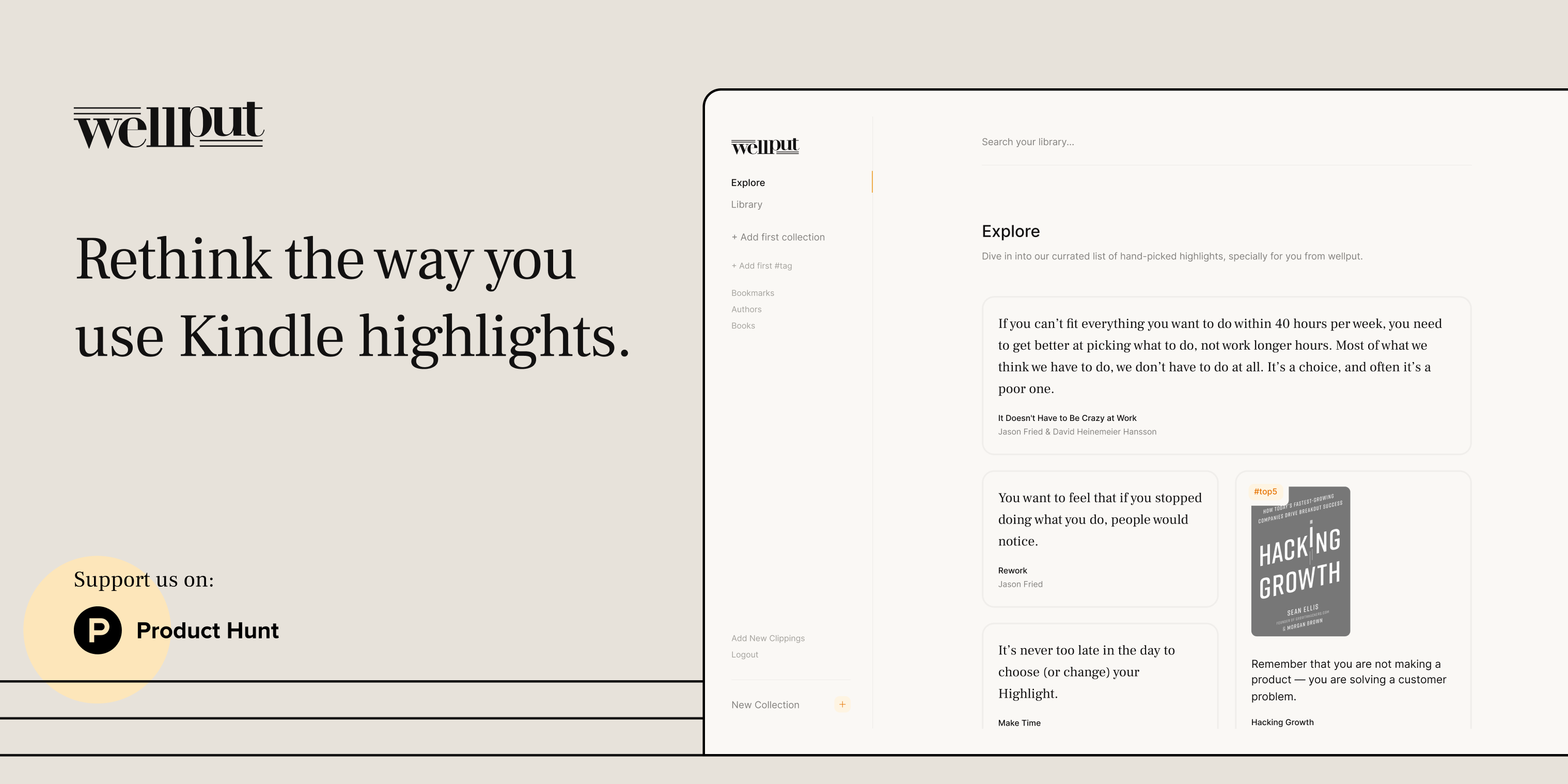
A landing page launch and Product Hunt exposure tested real-world traction and message resonance before committing engineering capacity.
Key hypothesis
All respondents reported reviewing highlights as inefficient and unintuitive. More importantly, they described a deeper frustration: highlights accumulated but were rarely revisited. This reframed the product from a storage tool into a retrieval and reflection system.


Building MVP
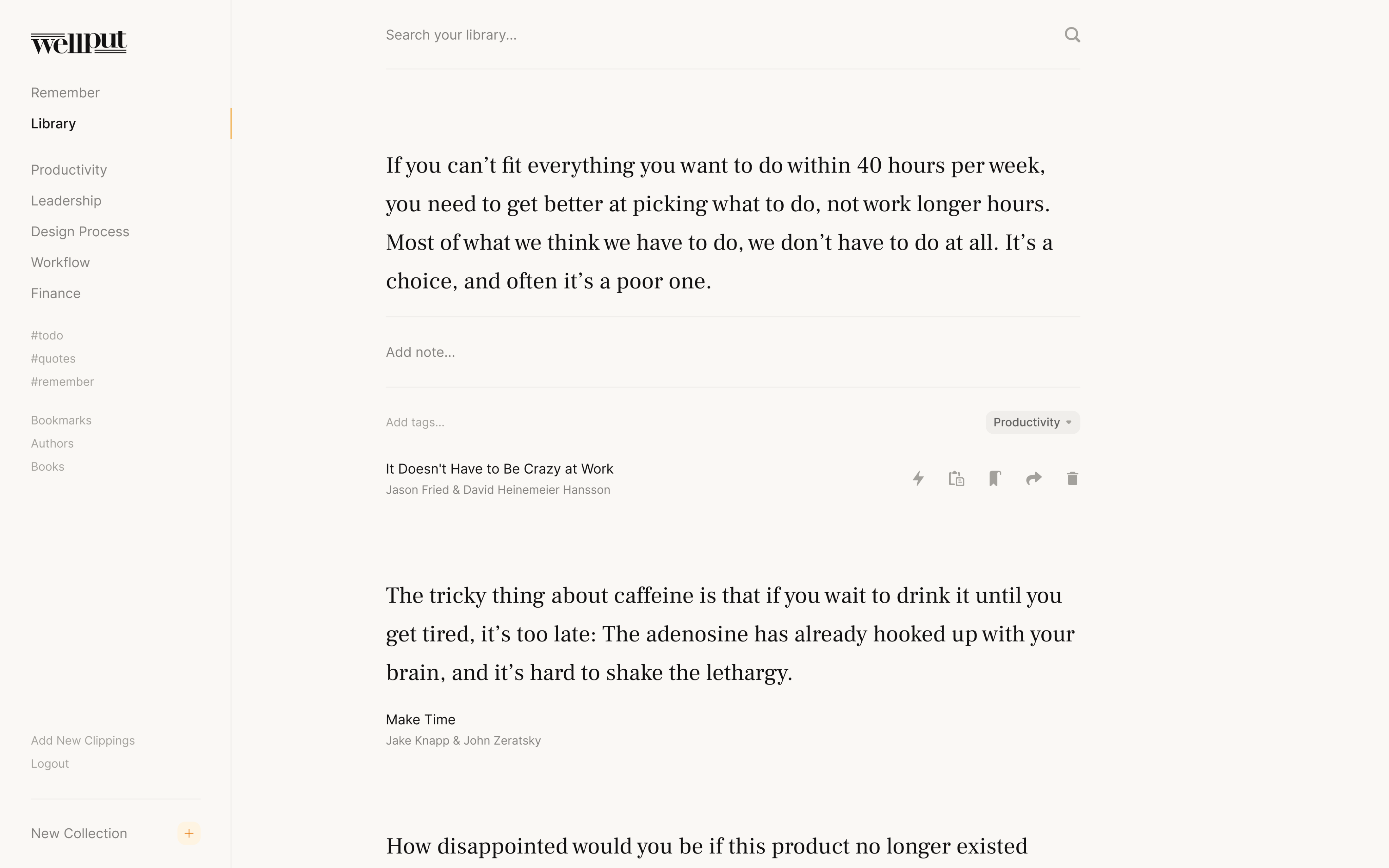
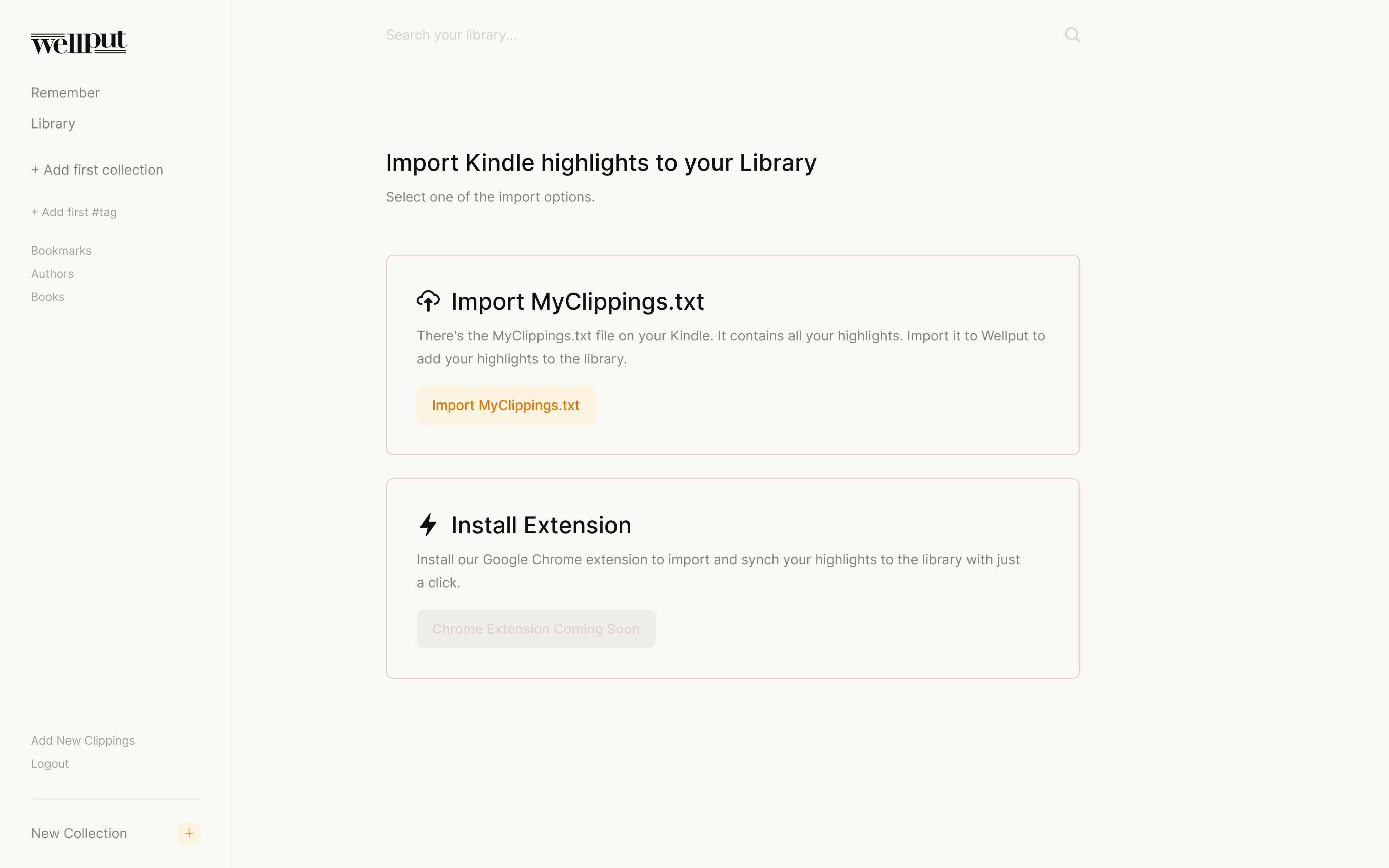
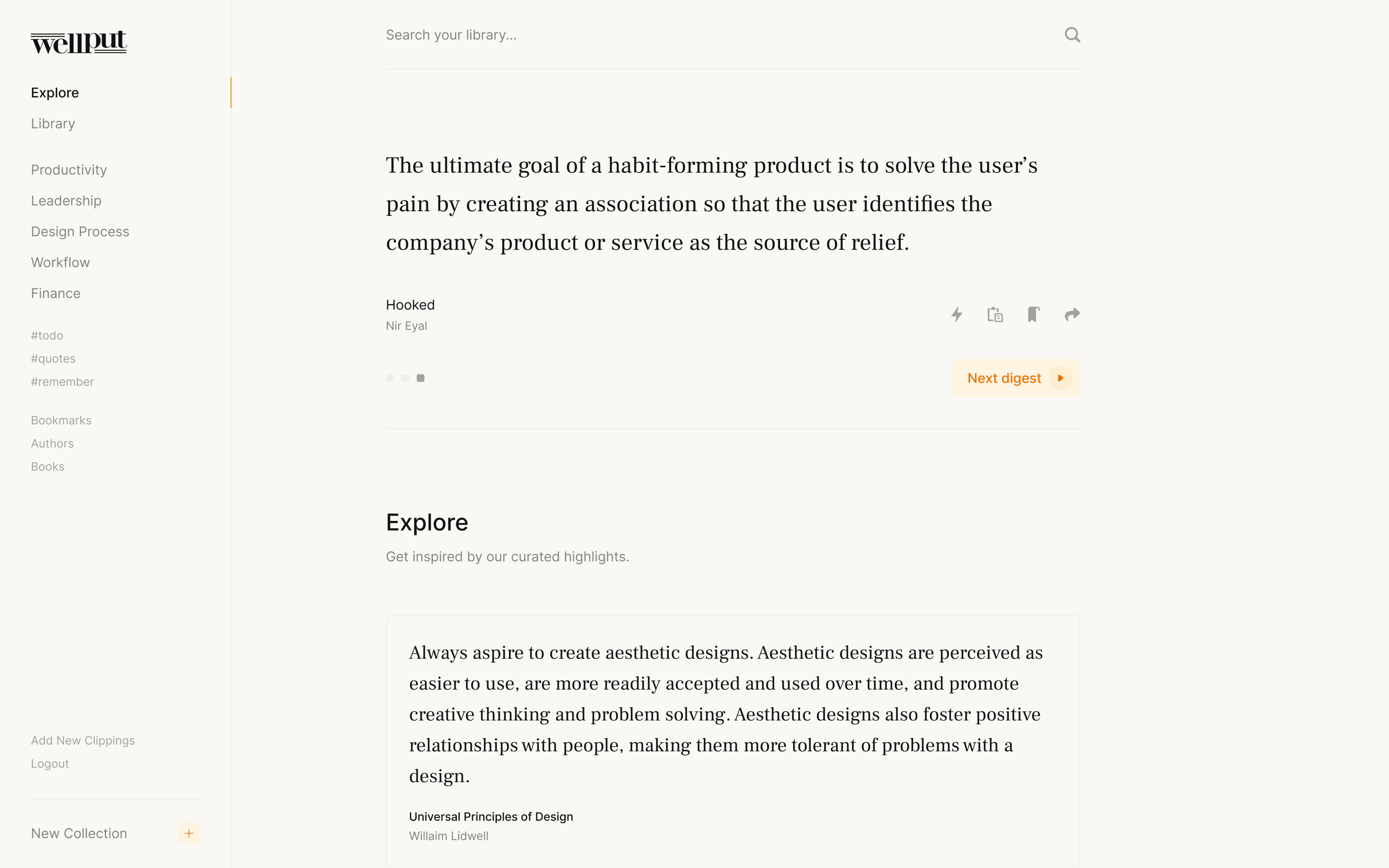
Workshops translated validated insights into a sharply defined MVP focused on core behaviors: import, filter, organize, and resurface.
I defined the experience architecture around how users think about knowledge categories, tags, and contextual resurfacing and led the design direction in collaboration with Mikołaj and Damian to ensure system coherence and execution quality.
Early branding and teaser prototypes were developed together with Maciej (Brand Design) to validate positioning and emotional resonance before full development.
Building MVP
I led Wellput from hypothesis through MVP and go-to-market, including structuring validation, defining scope, and organising the Product Hunt launch.
The launch generated early adopter traction and confirmed real demand beyond interviews. Shortly after, I transitioned roles, and the product did not continue under my ownership. but the core objective was achieved: the product bet was validated with real market signals, not assumptions.
Reflections - what I apply today?
Wellput strengthened my ability to shape product bets before committing to build. By validating pain intensity and testing early market signals, we reduced investment risk and avoided building a feature-led tool without real demand.
It also reinforced the importance of structured discovery anchored in clear goals. Today, rapid prototyping including with AI accelerates validation, not thinking. The strategic work happens before opening any tool, knowing exactly what must be tested and why.
Curious about the details?
Let’s chat!



/06
Wellput
Shaped 0→1 Tonik’s venture product. Defined strategy from concept to MVP by validating the riskiest assumptions before committing resources.
Context
Kindle highlights promised learning leverage but delivered clutter. Users collected insights they never revisited.
Wellput was a Tonik’s venture, built from scratch to turn passive highlights into structured, retrievable knowledge. I led product discovery, defined strategy, and later owned product direction through MVP delivery (2020–2021).
Problem space
The opportunity wasn’t better storage it was better retrieval. Knowledge workers needed a way to filter, structure, and resurface insights in a meaningful way.
The core business question: Is the frustration strong enough to justify a standalone product? And can we differentiate in a crowded productivity space?
Discovery
I structured discovery around risk reduction: validating pain intensity, switching intent, and value proposition clarity before investing in build.
Rather than jumping into features, we pressure-tested the problem through competitive analysis, user interviews, surveys, scoping workshops, and a market-facing landing page.
A landing page launch and Product Hunt exposure tested real-world traction and message resonance before committing engineering capacity.
Key insights
All respondents reported reviewing highlights as inefficient and unintuitive. More importantly, they described a deeper frustration: highlights accumulated but were rarely revisited. This reframed the product from a storage tool into a retrieval and reflection system.
Building MVP
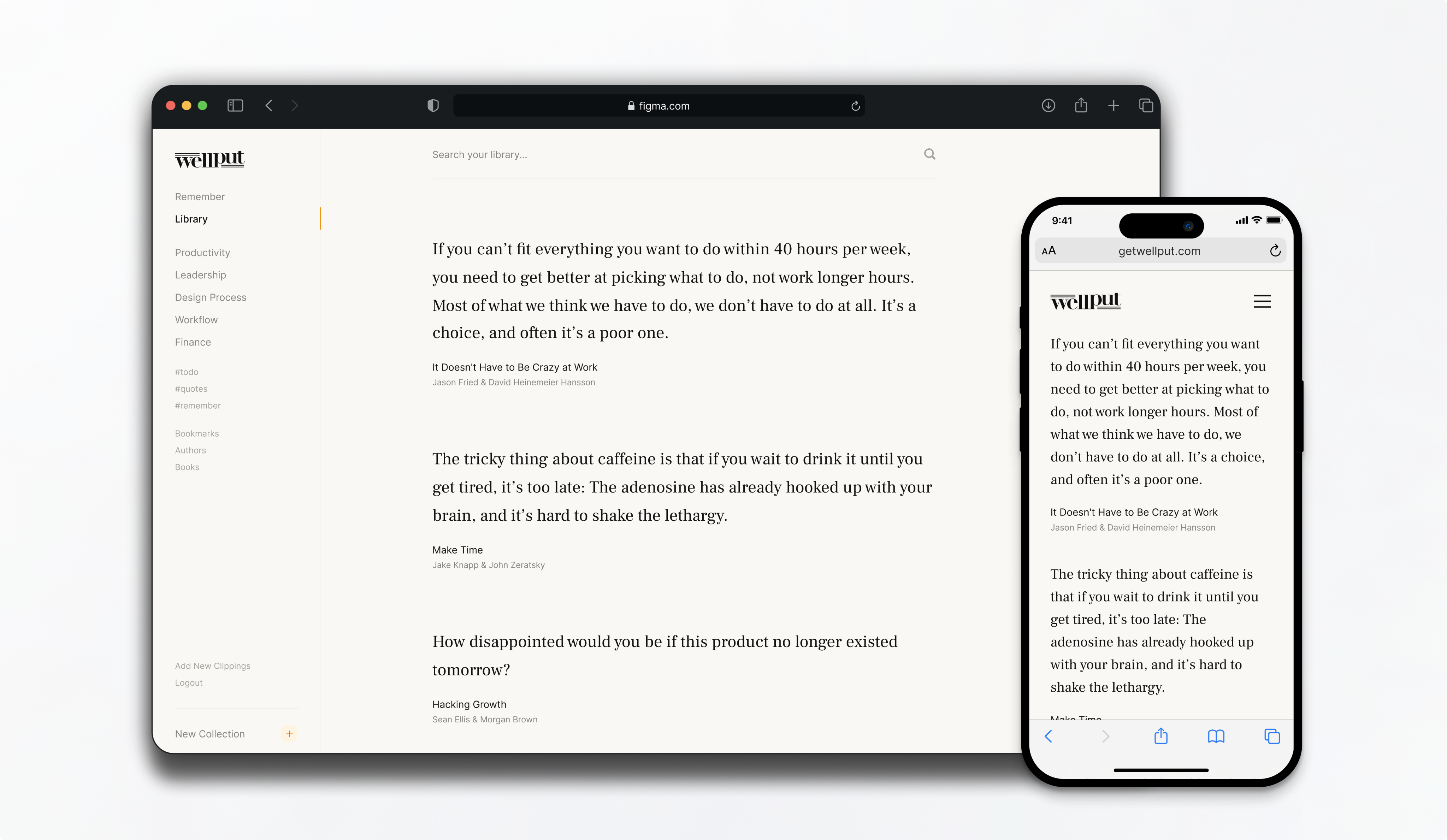
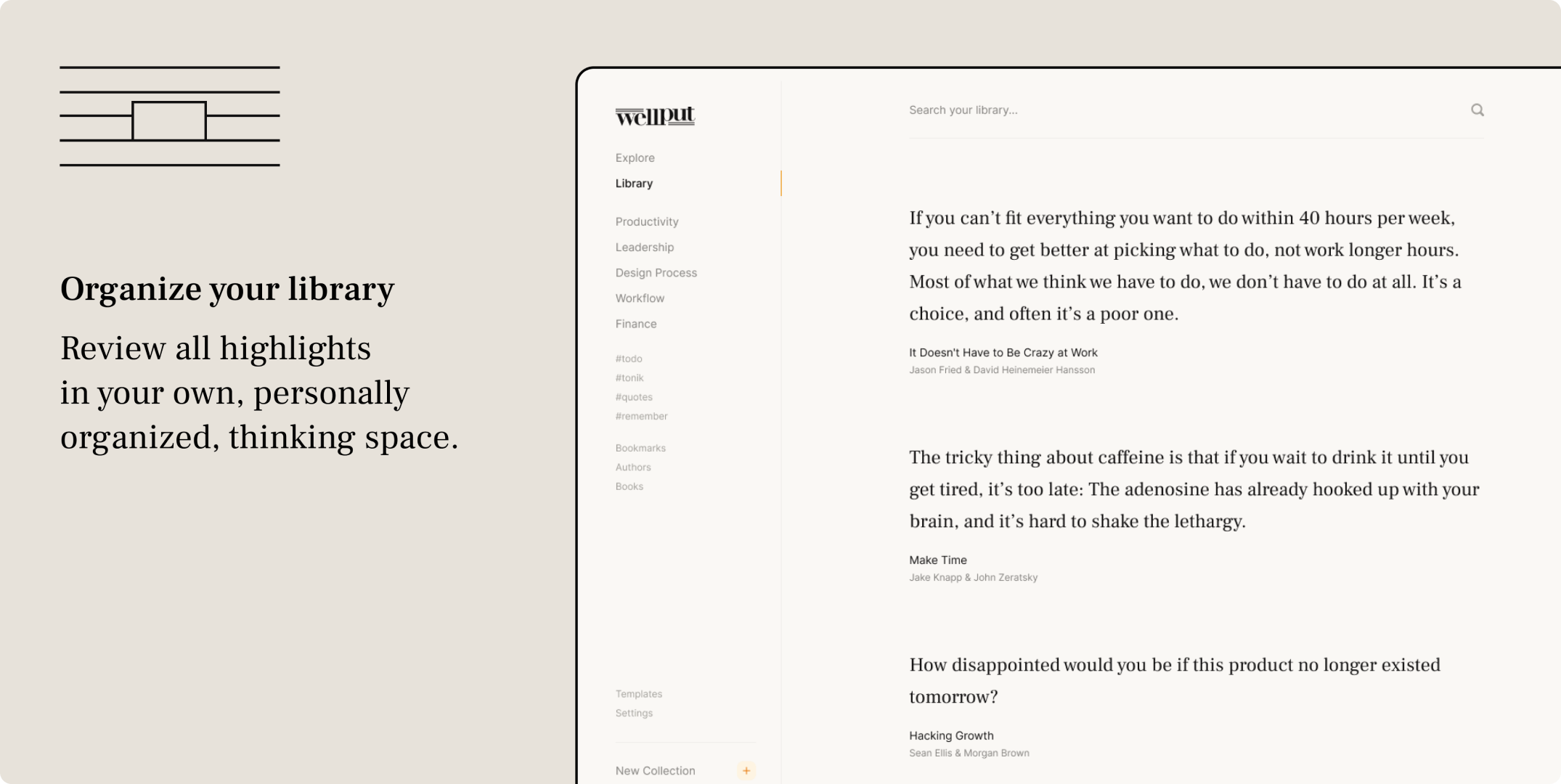
Workshops translated validated insights into a sharply defined MVP focused on core behaviors: import, filter, organize, and resurface.
I defined the experience architecture around how users think about knowledge categories, tags, and contextual resurfacing and led the design direction in collaboration with Mikołaj and Damian to ensure system coherence and execution quality.
Early branding and teaser prototypes were developed together with Maciej (Brand Design) to validate positioning and emotional resonance before full development.
Results
I led Wellput from hypothesis through MVP and go-to-market, including structuring validation, defining scope, and organising the Product Hunt launch.
The launch generated early adopter traction and confirmed real demand beyond interviews. Shortly after, I transitioned roles, and the product did not continue under my ownership. but the core objective was achieved: the product bet was validated with real market signals, not assumptions.
Reflections - what I apply today?
Wellput strengthened my ability to shape product bets before committing to build. By validating pain intensity and testing early market signals, we reduced investment risk and avoided building a feature-led tool without real demand.
It also reinforced the importance of structured discovery anchored in clear goals. Today, rapid prototyping including with AI accelerates validation, not thinking. The strategic work happens before opening any tool, knowing exactly what must be tested and why.
Let’s chat!


